

As the tide of artificial intelligence surges forward, permeating every sector of the economy and fuelling ever more vigorous industrial innovation, the stage was set on May 23rd and 24th beside the Qiantang River. On this fertile ground of Yuhang, the 2026 Global Artificial Intelligence Technology Conference (GAITC 2026) drew to a triumphant close. More than 200 distinguished experts, scholars, industry leaders, and technological pioneers from across the globe convened to forge consensus through the clash of ideas and chart a shared future via deep dialogue. By comprehensively deepening the integration of industry, academia, research, and application, the conference has injected potent momentum into Yuhang's ambition to establish itself as a national powerhouse for AI industrial innovation.
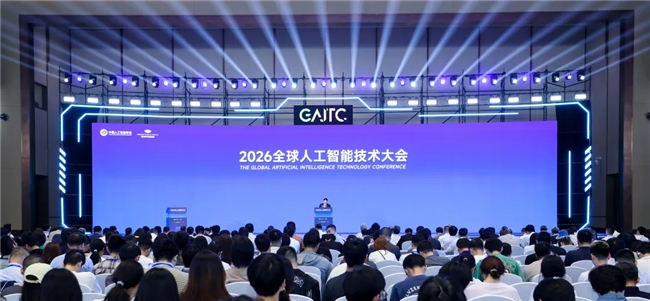
Conference Panorama
Uniting to Steer the Course, Convening to Chart Growth
Yuhang has long cultivated the artificial-intelligence sector, achieving notable success in research and development, real-world application, platform construction, and enterprise incubation. It has thus emerged as a domestic wellspring of AI innovation. Buoyed by this solid industrial foundation and vigorous momentum, the conference attracted keen attention from government regulators at all levels and numerous industry leaders. Distinguished guests from academia, research institutes, and the business community gathered in person to partake in the occasion.
At the opening ceremony, addresses were delivered in succession by Liu Fei, a member of the Standing Committee of the Zhejiang Provincial Party Committee and secretary of the Hangzhou municipal party committee; Weng Qiwen, deputy party secretary and director of the SME Development Promotion Centre under the Ministry of Industry and Information Technology; and Dai Qionghai, chairman of the Chinese Association for Artificial Intelligence, dean of the School of Information Science and Technology at Tsinghua University, professor, and director of the Beijing National Research Centre for Information Science and Technology. Each speaker offered insights grounded in broader industry trends and regional realities.
Secretary Liu Fei, speaking on behalf of the municipal party committee and government, extended congratulations on the convening of the conference and gratitude to the attendees. He pledged to forge a first-class innovation ecosystem, seizing the opportunity presented by the joint development of the Shanghai (Yangtze River Delta) International Science and Technology Innovation Centre. Aligning with the goals of creating the "most fertile soil" for talent growth, the "best incubator" for enterprise development, the "highest quality and efficiency" in integrated collaboration, and the "most tangible" policy services, Hangzhou will iteratively refine its policies on talent recruitment and cultivation, enterprise nurturing, tech-finance integration, and intellectual-property protection. The aim, he stated, is to generate a "distinctly superior allure" for both firms and skilled individuals.
In his remarks, Director Weng Qiwen noted that, as a national-level institution dedicated to promoting small and medium-sized enterprises (SMEs), his centre hopes the event will foster closer ties and deeper cooperation with participants across relevant fields. He urged continued attention to and involvement in initiatives that leverage AI to empower SMEs, thereby sustaining contributions to their high-quality development along the path of becoming "specialised, refined, distinctive, and innovative" enterprises.
Chairman Dai Qionghai observed that artificial intelligence is now at a critical juncture, transitioning from rapid evolution to systemic breakthroughs. He called for the thorough implementation of President Xi Jinping's important directives on strengthening basic research, closely aligning with the "AI Plus" action plan for the 15th Five-Year Plan period, and driving deep integration of AI with technological innovation and industrial development across all sectors. Mr Dai added that over seven years of partnership with Hangzhou, the conference has become a vital bridge linking the global academic community with Hangzhou's industrial base. It will continue to radiate Hangzhou's innovative experiences and ecosystem nationwide, contributing Chinese practices to the sustainable development of artificial intelligence worldwide.
The opening ceremony was presided over by Liu Ying, a member of the Standing Committee of the Hangzhou Municipal Party Committee and secretary of the Yuhang district party committee.
A Grand Unveiling: A Harvest of Achievements
The opening ceremony was a spectacle of milestones, marked by a succession of high-profile events ranging from the unveiling of strategic partnerships and the signing of project agreements to the inauguration of major competitions. Together, these moments offered a comprehensive portrait of the cutting edge of the artificial-intelligence industry.
Headlining the proceedings was the formal launch of the National Intellectual Property Operation Centre for the AI (Key Applications) Industry. As one of the first national-level platforms in China dedicated exclusively to the AI sector with a mandate for end-to-end intellectual property management, it also represents Yuhang's inaugural national-grade initiative in this field. The centre aims to streamline the entire IP value chain—from creation and protection to conversion and deployment—thereby accelerating the commercialisation and industrialisation of pioneering scientific breakthroughs.
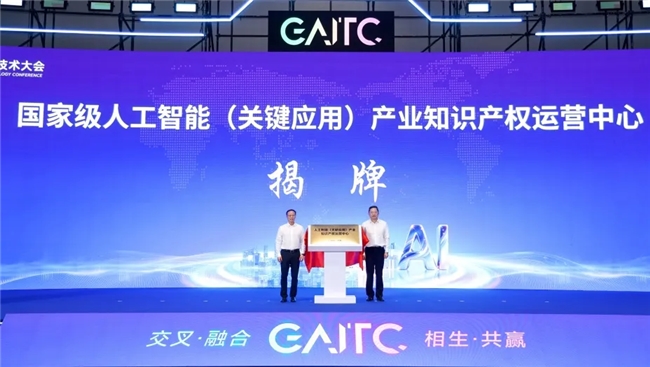
Unveiling Ceremony of the National Artificial Intelligence (Key Applications) Industrial Intellectual Property Operation Center
Leveraging Yuhang's robust industrial ecosystem and agglomeration advantages, a suite of high-quality AI collaboration projects secured letters of intent during a concentrated signing ceremony. The arrival of these promising ventures strengthens the region's end-to-end AI supply chain, bolsters local industrial capacity, and generates fresh momentum for high-quality development.
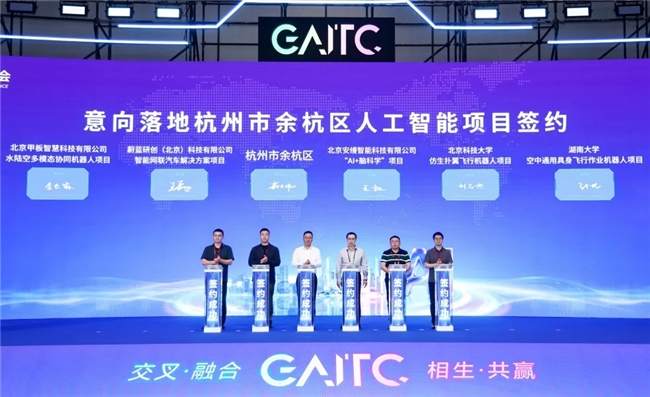
Signing ceremony for AI projects establishing a presence in Yuhang, Hangzhou
Beyond deal-making, the conference advanced the dissemination of innovative spirit, the formulation of industry standards, and the shaping of the industrial ecosystem. The event featured a presentation on the Wu Wenjun AI Science and Technology Award, championing a ethos of deep research and bold exploration. Simultaneously, organisers released the "List of Key AI Capabilities 1.0" and announced the 2026 CAAI-Ant Group Research Fund (AGI Special Project). A global call was also launched to identify the "Top Ten Questions" in AI for 2027. These initiatives, mutually reinforcing, provide authoritative guidance for technical R&D, scenario application, and talent development, while clarifying priority areas for long-term critical industrial breakthroughs and solidifying the foundation for collaborative innovation.
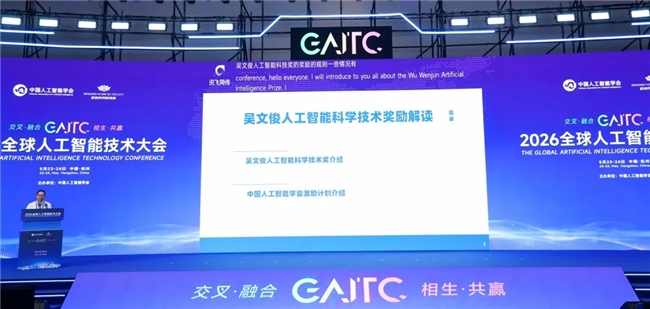
Presentation on the Wu Wenjun AI Science and Technology Award
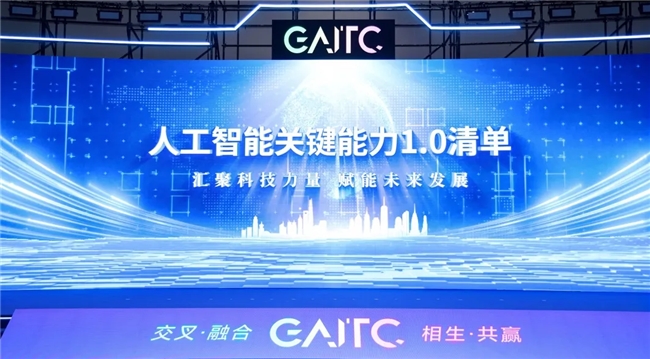
Launch ceremony for the "List of Key AI Capabilities 1.0"
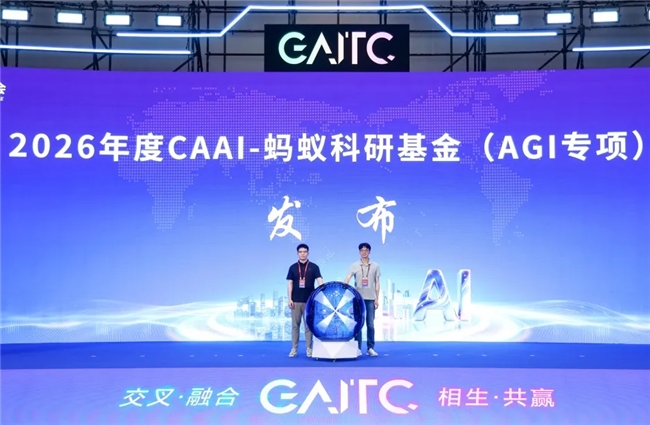
Announcement ceremony for the 2026 CAAI-Ant Group Research Fund (AGI Special Project)
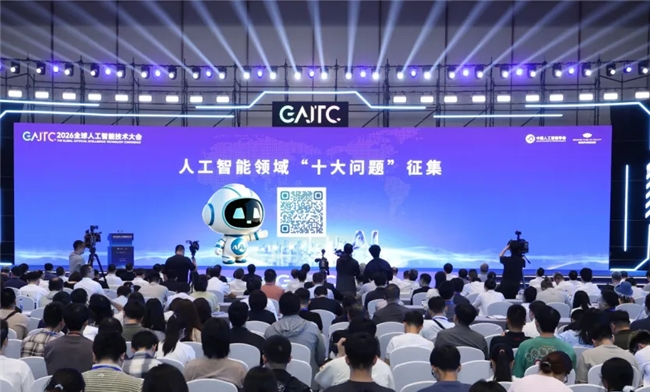
Call for submissions: The "Top Ten Questions" in AI for 2027
Concurrently, the 2026 Global AI Innovation and Entrepreneurship Competition was officially kicked off. Casting a global net for superior scientific projects and emerging innovative forces, the contest seeks to inject sustained vitality into the sector.
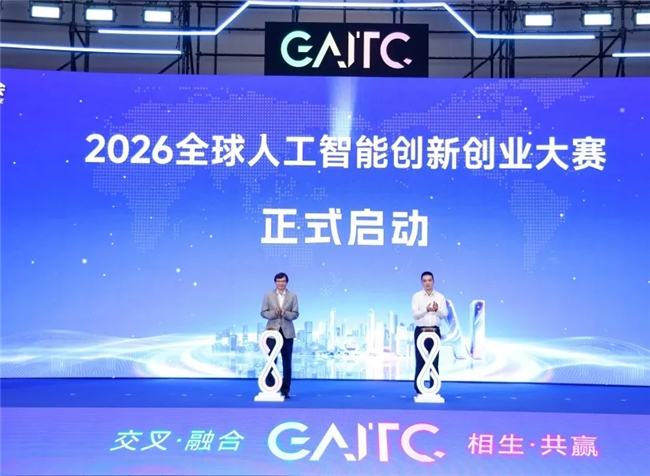
Launch ceremony for the 2026 Global AI Innovation and Entrepreneurship Competition
In the presence of distinguished guests, the 2026 Global AI Technology Conference was formally declared open, commencing two days of high-level industry exchange.
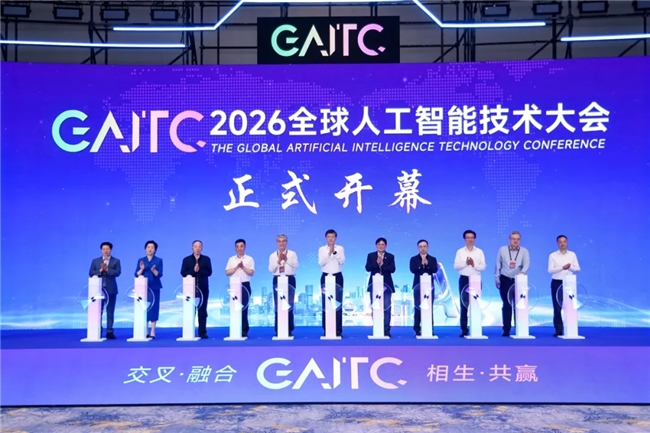
Launch ceremony for the 2026 Global AI Technology Conference
At the summit of discourse, intelligence leads the frontier. As the most authoritative, cutting-edge, and guiding cornerstone of GAITC 2026, the conference's keynote sessions convened ten pre-eminent academic experts and industry luminaries from China and abroad. They delivered addresses centred on foundational theories of artificial intelligence, breakthroughs in critical technologies, cross-industry integration, and the construction of an intelligent ecosystem, joining on-site dignitaries to explore the boundless potential of AI.
Pan Yunhe, former president of Zhejiang University and former executive vice-president of the Chinese Academy of Engineering, presented a keynote titled "The Knowledge-Technology Logic of AI Development". He offered a profound exposition of the overarching evolutionary laws and core dynamics of artificial intelligence, clarifying a clear strategic roadmap and trajectory for the industry's long-term advancement.
Yu Haibin, researcher at the Institute of Industrial Artificial Intelligence of the Chinese Academy of Sciences, director of the State Key Laboratory of Robotics and Intelligent Systems, and deputy director of the National Expert Committee on Intelligent Manufacturing, delivered a speech entitled "AI Catalysing a New Generation of Intelligent Manufacturing". He provided an in-depth analysis of the pathways for integrating AI with the real economy, offering forward-looking insights to propel the high-quality development of smart manufacturing.
Dai Qionghai, president of the Chinese Association for Artificial Intelligence, dean of the School of Information Science and Technology at Tsinghua University, and director of the Beijing National Research Center for Information Science and Technology, presented "Physical Intelligence: From Virtual to Reality". Grounded in the frontier trend of deep fusion between AI and the physical world, his address systematically elucidated the core connotations, technical frameworks, and innovative pathways of physical intelligence.
Christian Jensen, a fellow of the European Academy of Sciences, professor of computer science at Aalborg University in Denmark, and a fellow of both ACM and IEEE, spoke on "Temporal Intelligence—A Core Frontier". He deconstructed the technical principles, research achievements, and deployment scenarios of temporal intelligence, while assessing current challenges and forecasting future directions in the field.
Zhao Chunjiang, vice-president of the Chinese Association for Artificial Intelligence and director of the National Engineering Research Center for Information Technology in Agriculture, addressed the theme "Agricultural Agents and Autonomous Operation Systems". He shared insights into the technical architecture and R&D bottlenecks of agricultural agents, alongside the latest practical applications of autonomous operation systems in modern agriculture.
Qiao Junfei, president and professor of Beijing University of Technology and a recipient of national high-level talent programmes, delivered a keynote on "The Evolution of Urban Solid Waste Treatment Technologies and Intelligent Operational Control". His presentation analysed the current state of technological iteration and intelligent management systems within the sector, proposing viable strategies for the harmless and resourceful disposal of urban solid waste.
Rajiv Ranjan, a fellow of the European Academy of Sciences, chair professor at the School of Computing at Newcastle University in the UK, and a fellow of IEEE and AAIA, presented on "Ambient Intelligence in IoT Edge Systems". He explored the prospects for converged technological applications, offering reference directions for innovation and practical deployment in the IoT edge domain.
Ma Lizhuang, deputy dean and distinguished professor at the AI Institute of Shanghai Jiao Tong University, distinguished professor at East China Normal University, and a national high-level talent, delivered a talk titled "Sub-Micron Intelligent Visual Limit Detection Technology and Applications". He systematically showcased recent breakthroughs and industrialisation outcomes of intelligent visual technology in precision inspection, establishing a robust intelligent foundation for quality enhancement in precision industries.
Feng Junlan, chief scientist of China Mobile Group and chairman of the Central Enterprise AI Collaborative Innovation Platform, argued in her keynote "Native Security and Trustworthy Technologies for Foundation Models" that fortifying the underlying security defences of models is paramount for the industry's stable development. She further provided practical references for the compliant application and risk mitigation of large-scale models.
Lan Zhenzhong, director of the General Artificial Intelligence Research Centre at Ant Group, presented "LLaDA: Two New Dimensions of Language Model Scaling". He shared innovative concepts for model expansion and directions for technical breakthroughs, offering fresh research perspectives for advancing the capabilities and optimising the architectures of large models.
These ten keynotes, characterised by an international outlook, frontier thinking, and scholarly depth, comprehensively showcased the latest research achievements, technological dynamics, and long-term trends in the field of artificial intelligence.
The session was moderated by Du Junping, vice-president of the Chinese Association for Artificial Intelligence and professor at Beijing University of Posts and Telecommunications; Zhuang Yueting, vice-president of the association, professor at Zhejiang University, and a national high-level talent; and Ren Fuji, honorary vice-president of the association, chair professor at the University of Electronic Science and Technology of China, chief AI scientist, and a fellow of the Japanese Academy of Engineering.
Cultivating Depth, Bridging Divides
To foster profound exchange and collaborative innovation within artificial intelligence's niche sectors, the conference orchestrated 17 distinct thematic sessions. These gatherings facilitated a multi-dimensional collision of ideas, forging consensus across diverse fields and hierarchies.
Addressing the "stranglehold" challenges plaguing AI's foundational core technologies, the agenda featured specialised forums on embodied interactive intelligence; brain-inspired brain-computer interfaces; spatio-temporal intelligence, ranging from representation learning to cognitive reasoning; the convergence of virtual and physical realms in the spatio-temporal era; big-data intelligent perception; security and trustworthiness for large models and agents; and the industrial application of embodied intelligence. By confronting the industry's cutting edge, these sessions laid a robust foundation for sustained technological breakthroughs.
Adhering to the ethos of "AI for public benefit, AI for industrial revitalization," the conference convened sessions on medical AI alongside the third symposium on Large Language Medical Models (LLaMMs); intelligent agents and the new media ecosystem; "AI + Design"; and AI-driven innovations in holistic health. These initiatives sought to deepen the integration of AI with the real economy and public services, thereby unlocking the technology's inclusive value.
Recognize talent as the central engine of AI development, the conference tailored its offerings to the sector's human-capital needs. Sessions included the China Association for Artificial Intelligence's (CAAI) "Qingyuan Scholars" forum on frontier interdisciplinary research; a summit for primary and secondary school principals on AI education; a dialogue on fostering composite AI talent through generalist training; a postdoctoral innovation forum; "She Shines in AI," highlighting female contributions; and a global salon for young AI practitioners. This comprehensive approach aims to refine the talent cultivation ecosystem, securing the human foundation for the industry's long-term prospects.
Across all venues, the atmosphere was electric. Delegates spoke candidly about technical bottlenecks, application hurdles, and emerging opportunities, sharing practical insights to translate avant-garde concepts into reality and spur innovation across specific sub-sectors.
Multifaceted Synergy, Ecosystem Construction
Beyond the main plenary and thematic sessions, the conference staged seven signature events designed to dismantle barriers between academia, industry, research, and application. This strategy ensured full-spectrum synergy encompassing academic exchange, scenario observation, hands-on technical practice, resource matchmaking, and achievement showcases, thereby extending the conference's reach and enriching its substance.
Leveraging the CAAI's platform, the "CAAI on Campus" series visited Hangzhou Dianzi University, China Jiliang University, Zhejiang Gongshang University, Zhejiang University, and the Zhijiang Laboratory. These engagements built vital bridges for school-enterprise collaborative education and the co-creation and sharing of research outcomes.
On the front of scenario application, activities such as "Real-World AI Scenario Tours in Hospitals" and workshops on "Fine-Tuning Medical Large Models and Building Agents" allowed delegates to witness AI's tangible impact in healthcare firsthand, while practical training enhanced technicians' applied capabilities. Meanwhile, closed-door matchmaking sessions focused on key AI competencies and future intelligent-industry investment precisely aligned technological assets with capital, accelerating the conversion of research into commercial projects.
The interactive AI experience exhibition emerged as the event's focal point, drawing significant attention. Fifty-one enterprises, research institutions, and university innovation teams showcased frontier achievements in intelligent robotics, quantum technology, and large-model applications. Attendees lingered to operate exhibits personally, experiencing the allure of AI up close. Through this immersive interaction, they grasped the pulse of AI's future and intuitively comprehended the transformative power of technology on daily life.
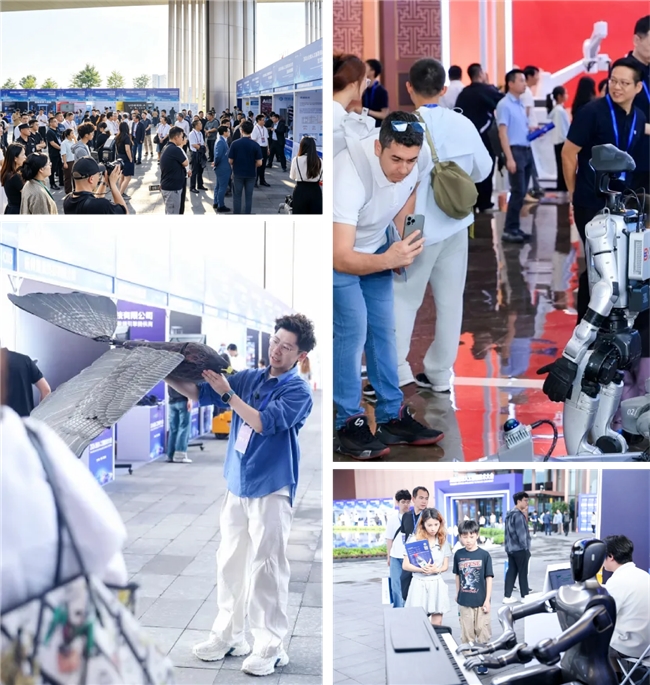
Interactive Exhibition Site
The two-day 2026 Global Artificial Intelligence Technology Conference has concluded successfully. With its high-level positioning, professional content, and diverse formats, the event achieved its five core objectives: academic exchange, technological interoperability, industrial matchmaking, talent convergence, and the showcase of innovations. In doing so, it has injected potent momentum into the high-quality development of Yuhang's AI industry.
Though the gala has ended, the drive for scientific and technological innovation persists. Looking ahead, the China Association for Artificial Intelligence will continue to serve as a pivotal bridge, joining hands with global peers to seize the nascent opportunities of the AI era and embark together on a new journey into the intelligent age.
Copyright © 2026 Global Vision English Network All Rights Reserved
 Marrakesh: The Jewel of Morocco
 Exploring Rabat: 21 Must-Visit Places Where History
 Fes Festival of Sacred Music: A Journey Through the
 Steal a Lazy Moment and Escape the Hustle and Bustl